







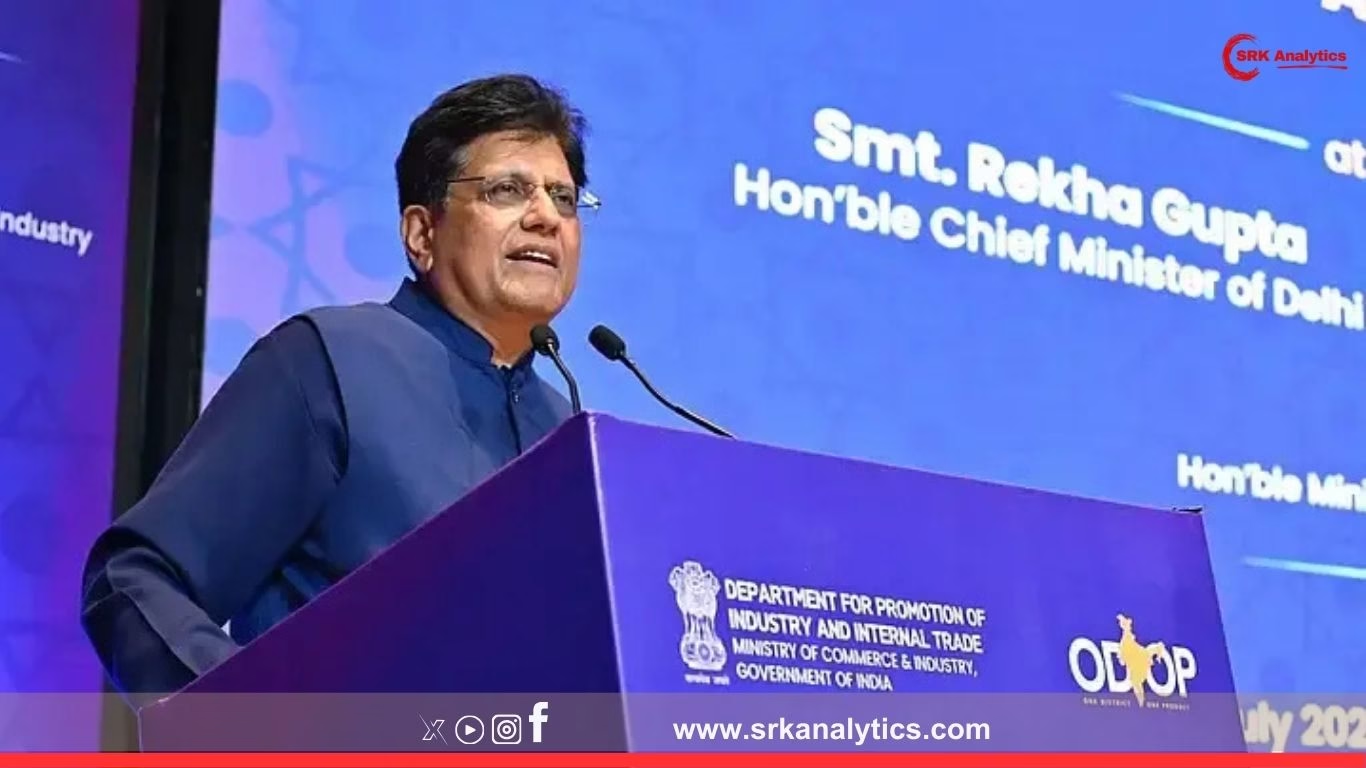
Union Commerce and Industry Minister Piyush Goyal has confirmed that India remains in active negotiations with the United States for a Bilateral Trade Agreement (BTA), despite recent strains triggered by steep tariff hikes and geopolitical disagreements. Speaking at the Annual Global Investor Conference 2025 in Mumbai, Goyal expressed optimism that the trade pact could be finalized by November, marking a significant milestone in India-US economic relations.
The announcement comes amid heightened tensions following the Trump administration’s imposition of a 50% tariff on Indian goods starting August 27, 2025. The move, widely viewed as retaliation for India’s continued oil trade with Russia, has complicated ongoing trade discussions. Nevertheless, Goyal emphasized that both nations are committed to resolving differences and advancing toward a mutually beneficial agreement.
🧭 India-US Bilateral Trade Deal: Key Developments
| Milestone | Date / Status | Commentary |
|---|---|---|
| Negotiations Initiated | March 2025 | Five rounds completed |
| Sixth Round of Talks | Postponed (originally Aug 25) | Due to US tariff imposition |
| Tariff Implementation | August 27, 2025 | 50% duty on select Indian exports |
| Current Status | Dialogue ongoing | New dates for sixth round awaited |
| Expected Conclusion | November 2025 | First phase of BTA likely to be signed |
| Target Trade Volume | USD 500 billion by 2030 | Up from current USD 191 billion |
Goyal acknowledged that “a little bit of geopolitical issues” had overtaken trade matters in recent discussions but reiterated India’s strategic autonomy and refusal to compromise on core sectors like agriculture and dairy.
🔍 India’s Red Lines and Strategic Autonomy
India has drawn firm boundaries in the negotiations, particularly around its agricultural and dairy sectors. Goyal made it clear that India will not “bow down” or be “bullied” into opening sensitive markets, especially under external pressure.
| Sector / Issue | India’s Position | US Expectations |
|---|---|---|
| Agriculture | Not open for negotiation | Market access sought |
| Dairy | Protected sector | Demands for liberalization |
| Oil Trade with Russia | Strategic autonomy maintained | US views as funding Ukraine conflict |
| Arms Purchases from Moscow | No rollback | US criticism continues |
Despite these differences, both sides have maintained open communication channels, with officials describing the tariff phase as “temporary” in a long-term relationship.
📉 Impact of Tariffs on Indian Exports
The 50% tariff imposed by the US has affected several key Indian export categories, including textiles, gems and jewellery, chemicals, and furniture. However, officials believe the diversified nature of India’s export basket will cushion the blow.
| Export Category | Tariff Impact (%) | Estimated Revenue Decline | Strategic Response |
|---|---|---|---|
| Textiles | 50% | ₹3,000–₹4,000 crore | Duty exemption on cotton imports |
| Gems & Jewellery | 50% | ₹2,500 crore | Exploring new markets in Middle East |
| Chemicals | 35% | ₹1,800 crore | Incentives under PLI scheme |
| Furniture | 40% | ₹1,200 crore | MSME credit support |
The Commerce Ministry is working on a package of relief measures, including GST tweaks and export-linked incentives, to support affected sectors.
🔥 Global Reactions and Diplomatic Signals
US Treasury Secretary Scott Bessent recently struck a reconciliatory tone, acknowledging the complexity of the India-US relationship and expressing hope that both nations will “come together” eventually.
| Stakeholder | Statement / Position | Implication for Talks |
|---|---|---|
| US Treasury Secretary | “India is the most populous democracy” | Signals long-term alignment |
| Indian Commerce Minister | “We are in dialogue” | Talks remain active despite tensions |
| Industry Chambers | “Temporary phase” | Advising exporters not to panic |
| Exporters’ Associations | Seeking clarity on tariff duration | Urging government support |
The SCO summit in Tianjin, China, where India met with Russia and China, was described by Bessent as “largely performative,” further highlighting the geopolitical backdrop of the trade talks.
🧠 Expert Commentary and Strategic Outlook
| Expert Name | Role | Comment |
|---|---|---|
| Meera Iyer | Trade Policy Analyst | “India’s firm stance on agriculture is a signal of strategic maturity.” |
| Rajiv Bansal | Global Trade Consultant | “The BTA could unlock USD 500 billion in trade by 2030.” |
| Dr. Rakesh Sinha | Geopolitical Economist | “Tariffs are a short-term irritant in a long-term partnership.” |
Experts agree that the bilateral trade deal, if finalized, could be a game-changer for India’s export competitiveness and supply chain integration.
📦 India’s Broader Trade Strategy
India has already signed trade agreements with Australia, the UAE, Mauritius, the UK, and the four-nation European bloc EFTA. The BTA with the US is seen as a critical missing piece in India’s global trade architecture.
| Trade Partner | Agreement Status | Strategic Benefit |
|---|---|---|
| Australia | Signed | Access to minerals, education services |
| UAE | Signed | Gateway to Middle East |
| Mauritius | Signed | Africa outreach |
| UK | Signed | Services and fintech collaboration |
| EFTA Bloc | Signed | Pharma and dairy exports |
| United States | In negotiation | Largest export market, tech collaboration |
The government aims to double India’s exports to USD 1 trillion by 2030, with the US playing a pivotal role in that vision.
📌 Conclusion
India’s active dialogue with the United States for a Bilateral Trade Agreement reflects a complex but resilient partnership, shaped by strategic autonomy, economic ambition, and geopolitical realities. Despite tariff tensions and postponed negotiations, both nations remain committed to resolving differences and unlocking new trade potential. As Minister Piyush Goyal affirmed, “Lots happen, lots more to go”—and the road to November could redefine India’s global trade trajectory.
—
Disclaimer: This article is based on publicly available government statements and media reports as of September 3, 2025. It is intended for informational purposes only and does not constitute financial, legal, or diplomatic advice.