




India’s automobile sector is gearing up for a major tax overhaul as the GST Council prepares to implement a simplified two-slab structure for vehicles. The proposed reform, expected to roll out by Diwali 2025, will reduce the Goods and Services Tax (GST) on small internal combustion engine (ICE) cars from 28% to 18%, with minimal cess. While this is a game-changer for budget-conscious buyers and mass-market manufacturers, luxury carmakers are bracing for a different reality.
According to industry estimates, small cars could become cheaper by ₹30,000 to ₹70,000 depending on the model, while luxury vehicles may see little to no benefit—or even face higher taxes if a separate 40% slab is introduced for premium segments.
🧭 GST Rate Comparison: Small vs Luxury Cars
| Car Category | Engine Capacity & Length | Current GST + Cess | Proposed GST + Cess | Price Impact |
|---|---|---|---|---|
| Small Petrol Cars | ≤1200cc, <4m | 28% + 1% = 29% | 18% + 1% = 19% | ₹30,000–₹70,000 cheaper |
| Small Diesel Cars | ≤1500cc, <4m | 28% + 3% = 31% | 18% + 3% = 21% | ₹35,000–₹75,000 cheaper |
| Mid-sized Cars | >1200cc or >1500cc | 28% + 15% = 43% | 18% + 15% = 33% | ₹80,000–₹1.2 lakh cheaper |
| Luxury Cars | >1500cc | 28% + 20% = 48% | 18% + 22% = 40%* | Minimal or no benefit |
| SUVs | >1500cc, >4m | 28% + 22% = 50% | 18% + 22% = 40%* | ₹50,000–₹1 lakh cheaper |
| Electric Vehicles | All capacities | 5% | 5% | No change |
*Subject to final approval by GST Council
🔍 Why Small Cars Win Big
The GST reform is designed to make mobility more affordable for the middle class and first-time buyers. Small cars, which dominate India’s passenger vehicle market, stand to gain the most due to:
- Lower base GST rate
- Minimal cess
- High price sensitivity among buyers
- Strong demand elasticity
Popular models like Maruti Suzuki Wagon R, Tata Punch, Hyundai Grand i10, and Maruti Baleno are expected to see price drops of ₹30,000 to ₹70,000, translating into lower EMIs and increased affordability.
| Model Name | Current Price (Delhi) | Expected Price Post-GST | EMI Reduction (5-Year Loan) |
|---|---|---|---|
| Wagon R | ₹8.13 lakh | ₹7.50 lakh | ₹1,100/month |
| Baleno | ₹8.82 lakh | ₹8.14 lakh | ₹1,200/month |
| Dzire | ₹9.25 lakh | ₹8.55 lakh | ₹1,210/month |
| Tata Punch | ₹7.75 lakh | ₹7.15 lakh | ₹1,040/month |
This reform is expected to boost sales in Tier 2 and Tier 3 cities, where affordability remains a key driver.
📉 Why Luxury Cars Lag Behind
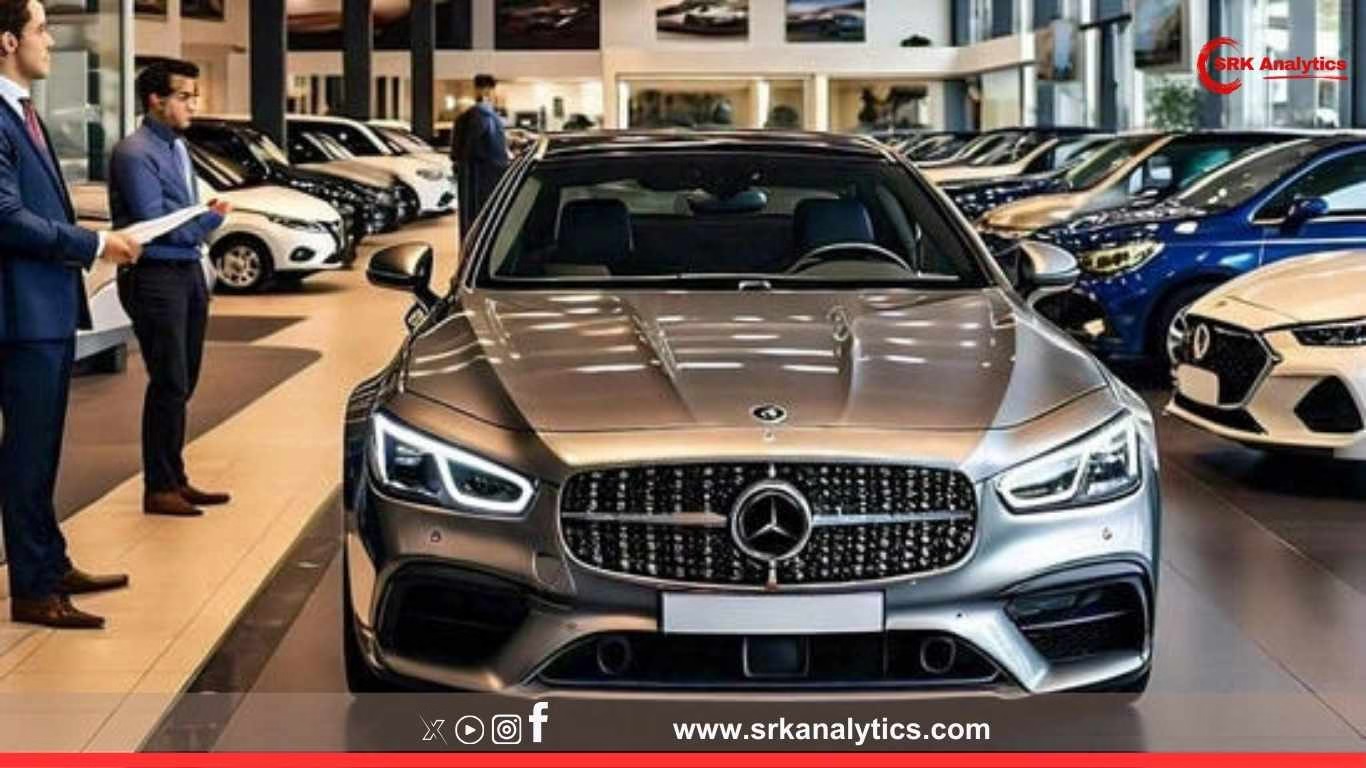
Luxury carmakers like Mercedes-Benz, BMW, Audi, and Volvo are unlikely to benefit significantly from the GST reform. In fact, they may face higher taxes if the Council introduces a separate slab for premium vehicles.
Key reasons include:
- High cess rates (up to 22%) remain unchanged
- Proposed 40% slab for luxury ICE vehicles
- EV incentives limited to mass-market models
- Price inelasticity among affluent buyers
| Brand | Popular Model | Current Tax Burden | Post-Reform Tax Burden | Price Impact |
|---|---|---|---|---|
| Mercedes-Benz | GLC | ~48% | ~40% | ₹1.2 lakh cheaper |
| BMW | X1 | ~48% | ~40% | ₹1.1 lakh cheaper |
| Audi | Q3 | ~48% | ~40% | ₹1 lakh cheaper |
| Volvo | XC40 Recharge (EV) | 5% | 5% | No change |
While the price drops may seem substantial in rupee terms, they represent only 3–5% of the total cost, which may not be enough to stimulate demand.
🔥 EVs: The Outlier in the Reform
Electric vehicles (EVs) continue to enjoy a flat 5% GST rate, with no cess. This benefits both budget and premium EVs, although the GST Council is considering raising the rate on high-end EVs priced above ₹20 lakh to 18%.
| EV Segment | GST Rate | Proposed Change | Impact on Buyers |
|---|---|---|---|
| Budget EVs (<₹20L) | 5% | No change | Continued affordability |
| Premium EVs (>₹20L) | 5% | 18% | ₹2–₹4 lakh price hike |
Luxury EV makers may need to revise pricing strategies or absorb the additional tax burden, which could affect profitability and slow adoption.
🧠 Expert Opinions on GST Reform
| Expert Name | Role | Comment |
|---|---|---|
| Jitin Makkar | ICRA Senior VP | “GST cuts will stimulate mass-market demand, but luxury cars remain muted.” |
| Hardeep Singh Brar | BMW Group India CEO | “Clarity on GST is essential to restore buyer confidence.” |
| Vikas Kaul | Auto Analyst | “Small cars will see real savings; luxury cars may not benefit proportionately.” |
Industry leaders are urging the government to maintain EV incentives and provide clarity on cess structures to avoid market distortions.
📦 Consumer Behaviour and Market Outlook
The GST reform is expected to:
- Accelerate purchases in the small car segment
- Shift demand toward sub-₹10 lakh models
- Delay luxury car purchases due to uncertainty
- Boost festive season sales in mass-market categories
| Segment | Buyer Response | Sales Outlook FY26 |
|---|---|---|
| Small Cars | Advance purchases, higher demand | 10–12% growth |
| Mid-size Cars | Moderate benefit, stable demand | 5–7% growth |
| Luxury Cars | Wait-and-watch, muted demand | 2–4% growth |
| EVs | Budget EVs gain, premium EVs slow | Mixed trajectory |
The GST Council is expected to finalize the new structure during its September 3–4 meeting, with implementation likely before Diwali.
📌 Conclusion
The upcoming GST reforms are poised to reshape India’s automobile landscape—offering significant relief to small car buyers while leaving luxury carmakers in a bind. By slashing taxes on budget-friendly models and maintaining incentives for electric vehicles, the government aims to boost affordability, stimulate demand, and support green mobility.
However, the muted impact on premium segments and the proposed hike in GST for luxury EVs could slow innovation and adoption in high-end categories. As the festive season approaches, clarity and consistency in tax policy will be key to unlocking the full potential of India’s auto market.
—
Disclaimer: This article is based on publicly available news reports and official statements as of September 1, 2025. It is intended for informational purposes only and does not constitute financial, automotive, or policy advice.