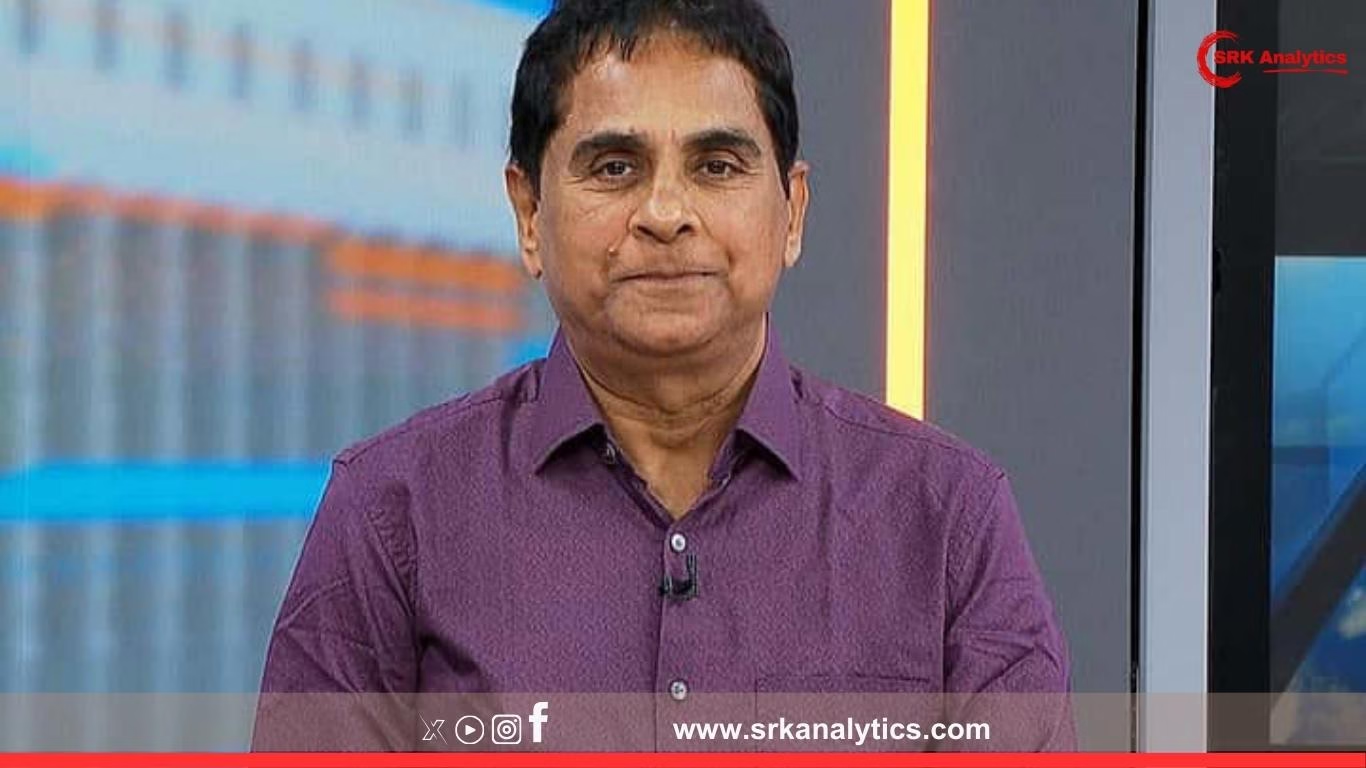
A fiery shareholder rant at the annual general meeting (AGM) of microcap firm GKB Ophthalmics Ltd has sparked widespread debate across India’s investor community, drawing a sharp response from ace investor Vijay Kedia. The incident, which unfolded during a virtual AGM, saw a retail investor launch a scathing attack on the company’s management, accusing them of poor governance, lack of accountability, and personal enrichment at the cost of shareholder value.
The video of the outburst went viral on social media, with the investor—later identified as Abhishek Kalra—owning just one share in the company. Despite his minimal stake, Kalra’s emotionally charged speech resonated with thousands of retail investors frustrated by stagnant stock performance and opaque corporate practices.
🧭 Timeline of Events Surrounding the AGM Controversy
| Date | Event Description | Outcome/Impact |
|---|---|---|
| August 22, 2025 | GKB Ophthalmics holds virtual AGM | Investor Abhishek Kalra delivers viral rant |
| August 23, 2025 | Vijay Kedia responds on social media | Condemns tone, supports core message |
| August 24, 2025 | Media and investor circles amplify the incident | Sparks debate on minority shareholder rights |
| August 25, 2025 | GKB Ophthalmics issues internal memo | Urges decorum, reviews shareholder feedback |
Kalra’s speech included mythological analogies, personal curses, and a demand for the resignation of Managing Director Krishna Gopal Gupta. His remarks, though extreme, highlighted the growing frustration among retail investors over corporate mismanagement.
📊 GKB Ophthalmics: Performance Snapshot
| Metric | Value (as of August 2025) | Year-on-Year Change |
|---|---|---|
| Stock Price | ₹38.70 | -32.27% |
| Market Capitalization | ₹42 crore | Down from ₹62 crore |
| Revenue (FY25) | ₹18.4 crore | Flat growth |
| Net Profit (FY25) | ₹1.2 crore | Marginal improvement |
| Promoter Holding | 74.8% | Unchanged |
Despite modest recovery in recent months, the company’s long-term performance has failed to inspire investor confidence, especially among minority shareholders.
🔍 Vijay Kedia’s Response: “Shareholder Money Must Be Respected”
Vijay Kedia, known for his long-term investment philosophy and sharp market insights, weighed in on the controversy via social media platform X:
“While I condemn the words, the essence is clear: shareholder money must be respected. Incompetent managements with fat salaries and perks must not forget—times have changed. India’s 13 crore investors have their own way of expressing themselves. It’s high time… Ek chutki share ki keemat jaan lo, babu”.
His statement, referencing the viral phrase “Ek chutki share ki keemat,” struck a chord with retail investors and market commentators alike.
| Kedia’s Key Message | Interpretation |
|---|---|
| “Condemn the words” | Advocates civility in shareholder discourse |
| “Essence is clear” | Supports demand for accountability |
| “Fat salaries and perks” | Criticizes misaligned compensation practices |
| “Times have changed” | Highlights rise of investor activism |
Kedia’s intervention amplified the broader message: corporate boards must take minority shareholders seriously, regardless of their stake size.
🧠 Rise of Retail Investor Activism in India
The incident reflects a growing trend of retail investor assertiveness, especially in microcap and smallcap companies where governance standards often lag behind.
| Trend | Drivers | Implications for Companies |
|---|---|---|
| Retail Activism | Social media, financial literacy | Increased scrutiny of board decisions |
| Minority Shareholder Power | SEBI reforms, digital AGM access | Need for inclusive communication strategies |
| Public Accountability | Viral content, influencer commentary | Reputation risk for management |
With over 13 crore active investors in India, the balance of power is shifting. Companies can no longer afford to ignore shareholder sentiment—even from holders of a single share.
📉 Investor’s Allegations Against GKB Ophthalmics
Kalra’s speech targeted multiple aspects of the company’s leadership:
- Accused MD Krishna Gopal Gupta of failing to deliver returns despite 40 years of experience.
- Alleged personal wealth accumulation while the company’s stock declined.
- Demanded resignation within 10 days, citing inability to “run the show.”
- Used mythological curses and harsh language to express frustration.
While the tone was widely criticized, the underlying concerns—lack of transparency, poor performance, and perceived arrogance—echoed across investor forums.
🔥 Viral Impact and Social Media Reactions
The video clip, shared by user Abhinav Kukreja, quickly gained traction online. The phrase “Ek chutki share ki keemat” became a rallying cry for retail investors demanding respect and accountability.
| Platform | Sentiment Summary | Trending Hashtags |
|---|---|---|
| Twitter/X | Mixed reactions, support for core message | #EkChutkiShare #InvestorRights #AGMRant |
| Professional debate on governance standards | #CorporateAccountability #MinorityVoice | |
| YouTube Shorts | Edits and commentary on AGM clip | #ViralInvestorSpeech #GKBAGM |
Several users praised Kedia’s balanced response, while others called for SEBI to enforce stricter norms on executive compensation and shareholder engagement.
📌 Conclusion
The viral investor rant at GKB Ophthalmics’ AGM—and Vijay Kedia’s pointed response—has reignited the conversation around corporate governance, minority shareholder rights, and the evolving landscape of investor activism in India. While the language used may have crossed a line, the message is clear: shareholders, regardless of their stake, deserve respect, transparency, and accountability.
As India’s investor base continues to expand, companies must adapt to a new era where even “ek chutki share” can carry the weight of public scrutiny. The boardroom is no longer insulated—and the age of passive investing is giving way to a more vocal, vigilant shareholder class.
—
Disclaimer: This article is based on publicly available news reports and official statements as of August 26, 2025. It is intended for informational purposes only and does not constitute financial, legal, or investment advice.