

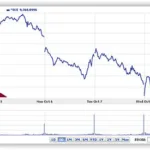




Market Exodus: FPIs Retreat from Indian Equities
Foreign Portfolio Investors (FPIs) have intensified their exit from the Indian equity market, pulling out ₹27,000 crore in May alone, contributing to a staggering total outflow of ₹2.2 lakh crore for the year 2026. This massive capital flight, driven by heightened global economic uncertainty, a strengthening U.S. dollar, and a strategic pivot toward artificial intelligence-focused markets abroad, has placed significant downward pressure on the Indian rupee.
Contextualizing the Shift
The current trend marks a sharp reversal from the robust inflows observed in previous years, which had positioned India as a primary destination for emerging market capital. Historically, India’s growth story relied heavily on foreign liquidity to sustain high equity valuations.
However, the global investment landscape has shifted as central banks in developed economies maintain elevated interest rates. This environment has rendered safer, dollar-denominated assets more attractive to institutional investors compared to the perceived risks of emerging markets.
The Weight of Global Uncertainty
Market analysts point to a confluence of factors fueling this divestment. The primary driver remains the persistent strength of the U.S. dollar, which diminishes the relative value of returns in domestic currencies for international investors.
Furthermore, the explosive growth of the artificial intelligence sector has redirected global capital toward concentrated technology hubs, primarily in the United States. Investors are increasingly reallocating portfolios to capture gains in companies leading the AI revolution, often at the expense of broader, diversified emerging market holdings.
Data from the National Securities Depository Limited (NSDL) indicates that this trend has permeated multiple sectors within India. While heavy-duty manufacturing and financial services once saw consistent inflows, they are currently facing the brunt of the sell-off as institutional portfolios undergo restructuring.
Expert Perspectives
Financial experts suggest that the current volatility is a reflection of a “risk-off” sentiment dominating global boardrooms. According to market researchers, the psychological threshold for investors has lowered, causing them to move toward liquidity rather than long-term growth prospects in developing nations.
“The outflows are not necessarily a reflection of poor domestic fundamentals, but rather a global reallocation strategy,” noted one senior economist. “When the cost of capital rises globally, investors prioritize markets with the highest immediate growth potential, which currently favors AI-centric tech markets over traditional sectors.”
Economic Implications
The persistent outflow has tangible consequences for the domestic economy, most notably the depreciation of the rupee. As foreign investors sell Indian stocks, they exchange the proceeds for foreign currency, creating excess supply of the rupee in the forex market.
For the average consumer, this translates into higher import costs, particularly for energy and electronic goods, which could exacerbate domestic inflationary pressures. For the corporate sector, the withdrawal limits the availability of low-cost capital for expansion and innovation.
Future Outlook
Moving forward, market observers will be watching the upcoming central bank policy announcements in the U.S. for signals on potential interest rate cuts. Any softening of the dollar could potentially stabilize the outflow trend and restore investor confidence.
Additionally, domestic institutional investors (DIIs) are currently acting as a buffer, stepping in to absorb some of the selling pressure. The sustainability of this domestic support will remain a critical metric for market stability in the coming quarters. Investors should monitor both the foreign exchange reserve levels and upcoming quarterly earnings reports as indicators of whether the market can decouple from global sentiment.