




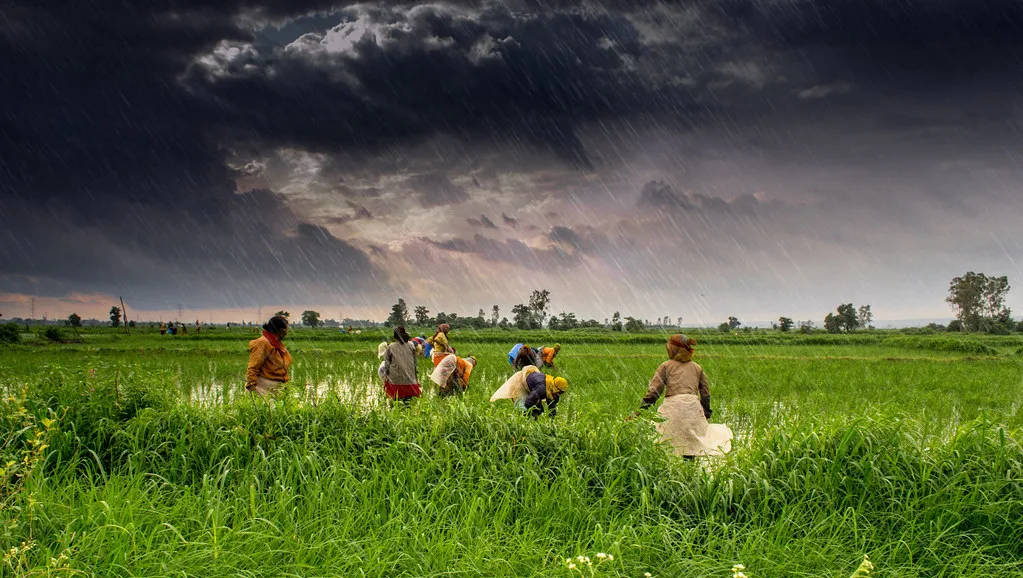
The Tamil Nadu Agricultural University (TNAU) has officially projected a near-normal South-West monsoon for the state this year, providing a critical outlook for the region’s agricultural sector. Released this week in Coimbatore, the forecast suggests that the majority of districts across Tamil Nadu will receive rainfall within the long-period average, though specific regions face potential moisture deficits.
Context and Historical Patterns
The South-West monsoon, which typically spans from June to September, serves as a vital hydrological period for the Indian subcontinent. For Tamil Nadu, this window is essential for replenishing reservoirs and supporting kharif crop cycles, particularly in regions that rely on irrigation linked to the Cauvery basin.
TNAU’s Agro Climate Research Centre utilizes advanced meteorological modeling and historical data sets to derive these predictions. By analyzing sea surface temperatures in the Indian Ocean and the Pacific, researchers calculate the likelihood of precipitation patterns that deviate from standard decadal averages.
Regional Disparities and Rainfall Distribution
While the state-wide forecast remains optimistic, the TNAU report highlights localized concerns regarding specific geographic zones. Western Tamil Nadu and the Tirunelveli district are currently identified as areas that may experience rainfall deficits during the upcoming months.
These potential shortfalls are attributed to localized atmospheric conditions that may divert moisture-bearing winds away from the Western Ghats’ rain shadow areas. Farmers in these specific districts are advised to monitor local meteorological updates closely as the season progresses.
Expert Perspectives and Agricultural Preparedness
Agricultural experts emphasize that a “near-normal” forecast does not equate to uniform distribution. Dr. S. Panneerselvam, a senior agro-meteorologist, noted that temporal distribution—the timing of the rainfall—is often more critical for crop health than total seasonal volume.
Data from the India Meteorological Department (IMD) supports the TNAU’s generally favorable outlook, citing consistent moisture levels in the Bay of Bengal. However, the reliance on rain-fed agriculture means that even minor deviations in rainfall timing can impact yields for crops such as maize, cotton, and pulses.
Implications for the Industry
For the agricultural industry, this forecast serves as a baseline for resource allocation and crop planning. State agencies are already preparing to provide support to farmers in the western regions to mitigate the risks associated with the projected localized deficits.
Water management authorities are also prioritizing the maintenance of irrigation infrastructure to ensure that existing water reserves are utilized efficiently. If the monsoon tracks as predicted, the state’s agricultural output is expected to remain stable, preventing the inflationary pressures often associated with poor harvest cycles.
Future Outlook and Monitoring
Stakeholders should watch for monthly updates from TNAU, as these provide finer resolution data as the season matures. The shift toward precision agriculture in the region will likely rely on these real-time adjustments to planting schedules and water usage, ensuring that the state remains resilient against the inherent volatility of monsoon patterns.