


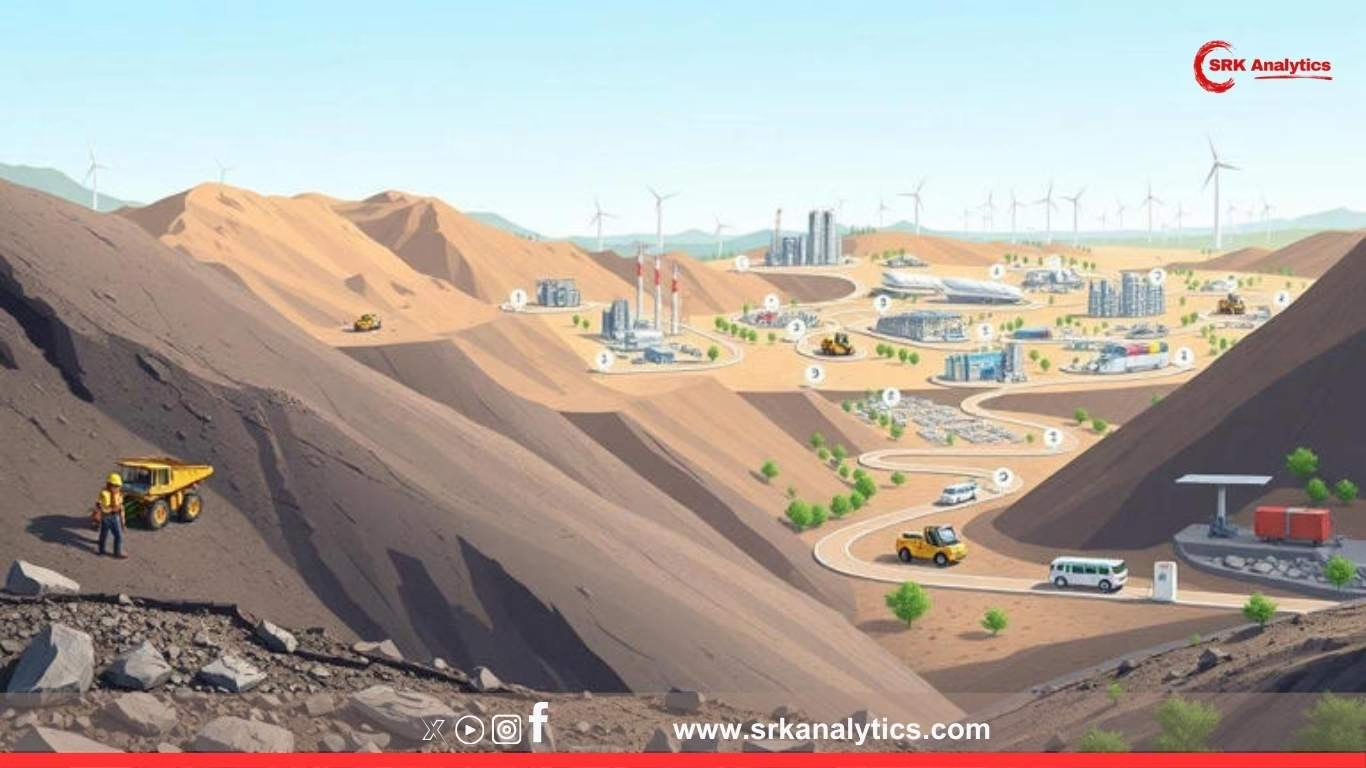
India is intensifying its focus on critical minerals and rare earths as part of its broader push for economic security, green transition, and industrial growth. A recent report has outlined five strategic policy pillars that could pave the way for India’s self-reliance in rare earth elements (REEs)—a segment currently dominated by a few global players, particularly China. These minerals are vital for high-tech industries, clean energy, defence, and electronics, making them central to India’s ambitions of becoming a global manufacturing hub.
As countries worldwide race to secure supplies of rare earths and critical minerals, India is positioning itself to develop a robust framework to not only reduce dependency on imports but also emerge as a global supplier.
Why Rare Earths Matter for India
Rare earth elements and critical minerals form the backbone of advanced technology and clean energy solutions. They are key inputs for:
- Electric vehicles (EVs) – battery production, permanent magnets.
- Renewable energy – wind turbines, solar panels.
- Defence – missile guidance systems, radar, aerospace.
- Electronics & IT – smartphones, semiconductors, displays.
- Healthcare – imaging devices, nuclear medicine.
At present, India is heavily dependent on imports, with over 85% of rare earth processing controlled by China, posing a strategic risk.
The Five Proposed Policy Pillars
The report emphasizes a comprehensive approach, focusing on five main pillars:
- Exploration and Mapping of Resources
- India needs to accelerate the geological mapping of its critical mineral reserves, especially in states like Jharkhand, Odisha, Rajasthan, and Andhra Pradesh.
- Investment in advanced survey technologies such as geospatial mapping, AI-based data mining, and satellite imaging will be essential.
- Domestic Processing and Refining Capacity
- While India has reserves, the processing technology is limited. Building refining facilities is crucial to ensure that extracted minerals can be converted into usable industrial inputs.
- Public-private partnerships (PPP) and foreign collaborations can help in technology transfer.
- Strategic Reserves and Stockpiling
- Just as India maintains strategic petroleum reserves, creating a critical minerals reserve will safeguard against supply chain disruptions.
- Stockpiles of lithium, cobalt, nickel, and rare earth oxides can act as a buffer during geopolitical crises.
- Global Supply Chain Partnerships
- India must form alliances with mineral-rich nations like Australia, Canada, and African countries.
- Bilateral agreements and joint ventures can help India secure long-term supplies while boosting domestic manufacturing.
- Sustainable Mining and Recycling
- Rare earth extraction can cause significant environmental damage if not managed properly.
- India needs a strong framework for eco-friendly mining practices, strict compliance norms, and promotion of urban mining (recycling critical minerals from e-waste).
Current Status of India’s Critical Mineral Resources
| Mineral | Major Use | India’s Reserve Status | Import Dependency |
|---|---|---|---|
| Lithium | EV batteries | Low | Very High |
| Cobalt | Aerospace, batteries | Limited | High |
| Nickel | Stainless steel, batteries | Moderate | Medium |
| Rare Earth Elements | Magnets, defence, electronics | Significant (underexplored) | High |
| Graphite | Batteries, lubricants | Available | Medium |
This shows India’s resource base is promising but underutilized due to lack of processing and refining infrastructure.
Economic and Strategic Implications
- Boost to Make in India & Atmanirbhar Bharat
- Rare earth self-reliance will strengthen domestic industries in EVs, electronics, defence, and semiconductors.
- It aligns with the government’s mission to reduce import dependency and create domestic value chains.
- Job Creation and Skill Development
- Mining, refining, and processing industries will generate thousands of jobs.
- Specialized training programs will be required for geologists, engineers, and environmental experts.
- Strengthening National Security
- Defence manufacturing is one of the largest consumers of rare earths. Ensuring secure supply chains will reduce India’s vulnerability to global disruptions.
- Contribution to Green Energy Transition
- Securing minerals like lithium, cobalt, and nickel will accelerate EV adoption and renewable energy capacity growth.
Global Context: India vs Other Countries
| Country | Rare Earth Market Share (%) | Strategic Approach |
|---|---|---|
| China | 60-65 | Dominates mining and refining; export restrictions used as leverage |
| USA | 12-15 | Expanding mining but still dependent on China for refining |
| Australia | 10-12 | Strong exploration, key supplier to allies |
| India | <2 | Limited production, processing gaps, high import reliance |
This highlights India’s urgent need to expand its share through policy intervention and global collaborations.
Challenges in Achieving Rare Earth Independence
- High Capital Requirement – Mining and refining require billions of dollars in investment.
- Technological Gaps – India lags in advanced processing and separation technologies.
- Environmental Concerns – Extraction has significant ecological costs that need mitigation.
- Global Competition – Other countries are aggressively securing long-term contracts with resource-rich nations.
Way Forward: Strategic Recommendations
- National Critical Minerals Policy – Establish a comprehensive framework with clear targets and implementation timelines.
- FDI and Technology Incentives – Encourage global companies to bring in technology for refining and processing.
- Integration with Manufacturing Clusters – Link mineral supply with semiconductor, EV, and defence manufacturing hubs.
- Green Mining Practices – Prioritize eco-friendly practices to balance growth with sustainability.
- International Leadership – Position India as a voice for equitable mineral access in multilateral forums like G20 and BRICS.
Conclusion
The push for rare earth self-reliance is not just an economic priority for India but also a geopolitical necessity. By adopting the five policy pillars—exploration, processing, strategic reserves, global partnerships, and sustainable practices—India can build a secure, resilient, and future-ready supply chain for critical minerals.
If executed effectively, this roadmap can transform India into a global hub for critical mineral production and processing, supporting its journey towards clean energy, industrial expansion, and national security.
Disclaimer: This article is for informational purposes only. It does not constitute investment, mining, or policy advice. Readers are encouraged to consult experts or official government releases for detailed guidance.