




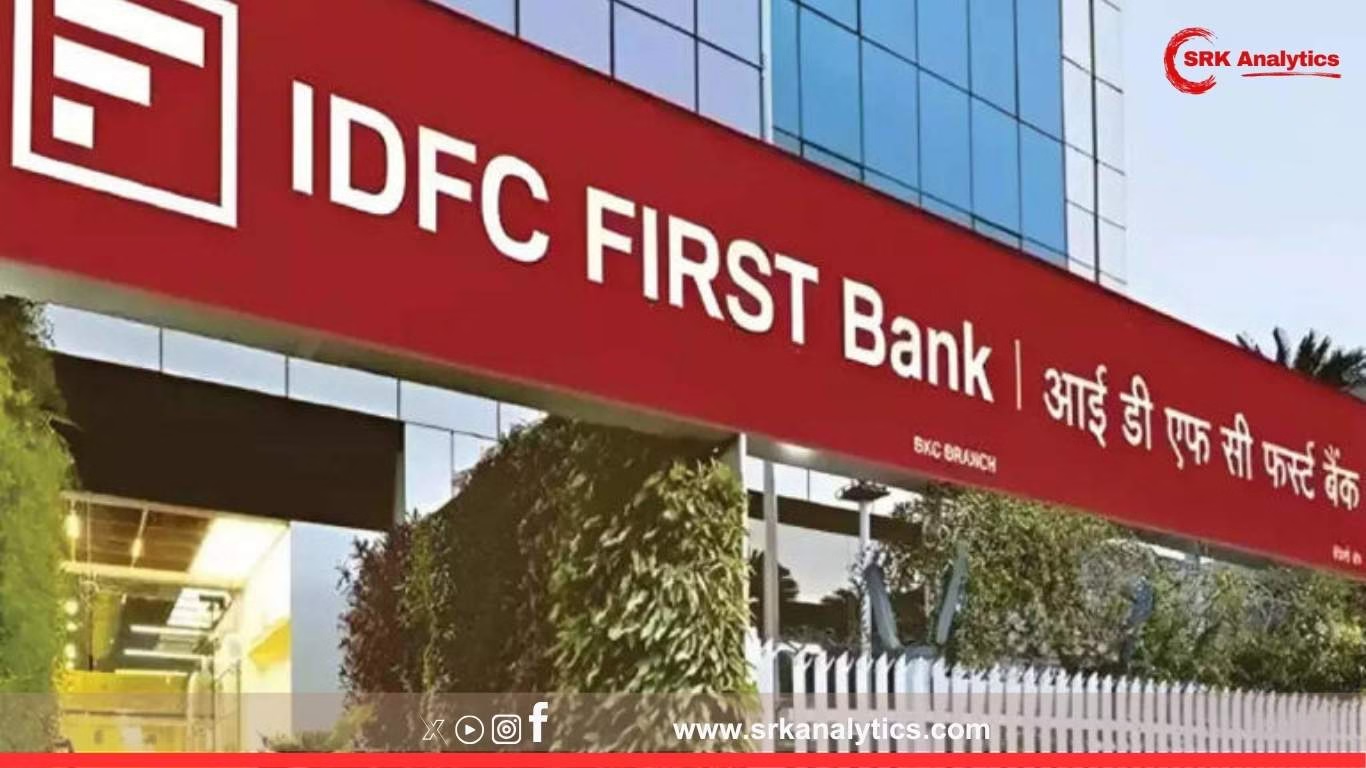
Shares of IDFC First Bank are expected to be in the spotlight after Platinum Invictus, a prominent global investment firm, received the Reserve Bank of India (RBI)’s approval to invest Rs 2,624 crore in the lender. The regulatory nod paves the way for one of the largest private equity-led capital infusions in India’s banking sector in recent times, signaling strong confidence in the bank’s growth trajectory.
The fresh investment comes at a time when IDFC First Bank has been on a steady growth path, driven by retail loan expansion, improving asset quality, and robust digital banking initiatives. Market analysts believe this capital infusion could not only strengthen the bank’s balance sheet but also accelerate its plans for expanding credit outreach and technology adoption.
Investment Details and Strategic Significance
Platinum Invictus is set to acquire a substantial equity stake in IDFC First Bank through this investment, which will be made via a combination of preferential allotment and open market purchases, subject to market conditions and compliance norms.
| Particulars | Details |
|---|---|
| Investment Amount | Rs 2,624 crore |
| Mode of Investment | Preferential allotment + open market |
| Investor | Platinum Invictus |
| Regulatory Approval | Reserve Bank of India (RBI) |
| Purpose | Capital augmentation, business expansion, digital investments |
This capital boost will enhance the Capital Adequacy Ratio (CAR), allowing the bank to extend more credit, pursue aggressive retail growth, and invest further in technological innovation.
IDFC First Bank’s Growth Story
Formed after the merger of IDFC Bank and Capital First in 2018, IDFC First Bank has positioned itself as a retail-focused lender with an emphasis on small business loans, consumer credit, and digital-first banking services. Over the last few years, the bank has:
- Expanded its retail loan book at a compound annual growth rate (CAGR) of over 25%.
- Improved its Net Interest Margin (NIM) steadily, aided by lower cost of funds and better asset mix.
- Reduced its Gross Non-Performing Asset (GNPA) ratio, reflecting improved credit discipline and risk management.
Financial Performance Snapshot
| Metric | Q1 FY25 | Q1 FY24 | YoY Change |
|---|---|---|---|
| Net Profit | Rs 880 crore | Rs 765 crore | +15% |
| NIM | 6.2% | 5.9% | +30 bps |
| GNPA Ratio | 1.9% | 2.2% | -30 bps |
| Credit Growth | 24% | 22% | +2% points |
| CASA Ratio | 50% | 48% | +2% points |
The latest investment is expected to provide a liquidity cushion that will allow the bank to sustain such momentum over the medium term.
Market Reaction and Share Price Outlook
Following the RBI approval announcement, analysts anticipate strong investor interest in IDFC First Bank shares. The stock has already been performing steadily over the last year, supported by consistent earnings growth and a retail-centric business model.
Key drivers for the share price in the coming quarters include:
- Capital Strengthening: The Rs 2,624 crore infusion will enhance Tier-1 capital, enabling higher loan disbursements.
- Digital Transformation: More resources for fintech partnerships, AI-driven customer engagement, and core banking upgrades.
- Geographical Expansion: Increased branch presence in underserved semi-urban and rural markets.
Strategic Benefits for Platinum Invictus
For Platinum Invictus, the investment marks a significant entry into India’s high-growth retail banking sector. The firm is known for targeting long-term, value-driven investments in emerging markets, and IDFC First Bank fits this profile due to its strong growth potential and improving profitability.
By partnering with IDFC First Bank, Platinum Invictus gains:
- Exposure to India’s expanding credit market driven by rising middle-class incomes.
- Stake in a digitally progressive bank that can scale efficiently.
- Long-term partnership potential in co-developing financial products and services.
Broader Implications for India’s Banking Sector
The RBI’s nod to such a large foreign investment underscores regulatory openness to well-capitalized global players in Indian banking. It also sends a positive signal to foreign institutional investors (FIIs) about the stability and growth prospects of India’s banking system.
Additionally, it comes at a time when credit demand is at multi-year highs, driven by strong consumption trends, infrastructure spending, and business expansion. A well-capitalized IDFC First Bank could play a larger role in meeting this demand.
Key Challenges Ahead
Despite the positive sentiment, certain challenges remain:
- Intense Competition: Large private banks like HDFC Bank, ICICI Bank, and Axis Bank dominate the retail banking space.
- Global Uncertainties: Currency volatility, interest rate shifts, and global economic slowdown could impact loan demand and investment flows.
- Execution Risk: Effective deployment of the new capital into profitable lending segments without compromising asset quality will be crucial.
Expert Opinions
Market experts believe that short-term market volatility notwithstanding, the investment is fundamentally positive for IDFC First Bank.
- Brokerage Views: Multiple brokerage firms have a buy rating on the stock with a 12-month target range of Rs 110–125, citing strong earnings visibility.
- Analyst Comments: “The capital infusion will fast-track IDFC First Bank’s growth plans and further solidify its retail banking leadership,” said one banking analyst.
Outlook and Future Plans
With the fresh capital and strategic partnership with Platinum Invictus, IDFC First Bank is expected to:
- Expand retail and SME lending aggressively.
- Invest in AI-driven banking solutions to enhance customer experience.
- Strengthen risk management frameworks to maintain healthy asset quality.
- Broaden its presence in tier-2 and tier-3 markets where formal credit penetration remains low.
If executed effectively, the move could push the bank into the top tier of private sector lenders in terms of retail market share within the next five years.
Disclaimer: This news article is intended for informational purposes only and should not be construed as investment advice. Readers should consult professional financial advisors before making any investment decisions.