





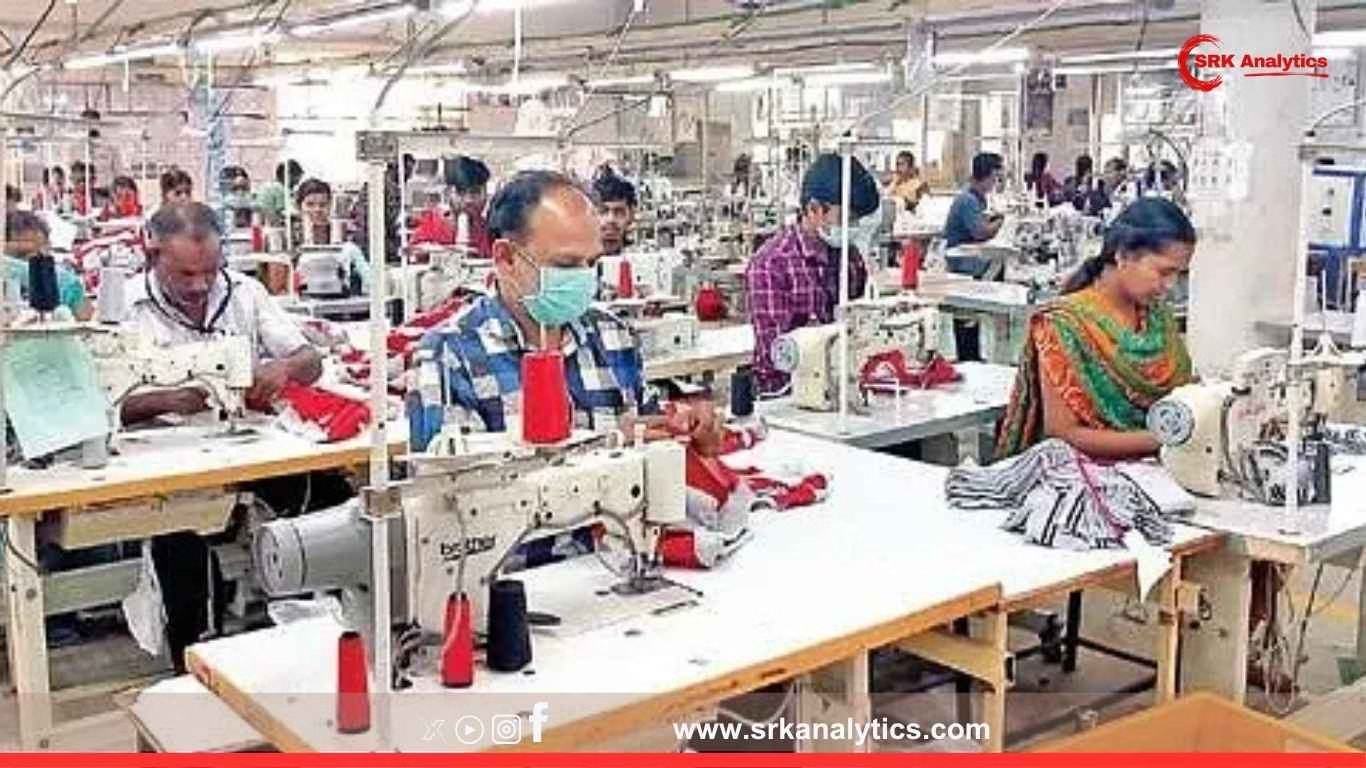
Despite various states rolling out lucrative incentives to attract textile businesses, Tiruppur’s knitwear manufacturers remain steadfast in their commitment to Tamil Nadu, resisting pressure to shift investments elsewhere. The industry, widely considered the knitwear capital of India and a vital export hub, has signaled a strong preference for retaining and expanding operations within the state due to an established ecosystem, skilled labor force, and integrated supply chains.
With over 9,000 units, the Tiruppur textile cluster generates more than ₹56,000 crore in annual exports and employs over 6 lakh people, making it one of the largest and most cohesive garment manufacturing clusters in South Asia.
Why Tiruppur Remains the First Choice for Textile Investment
Even as states like Uttar Pradesh, Gujarat, and Maharashtra pitch competitive incentives including capital subsidies, power tariff support, and plug-and-play industrial parks, knitwear businesses in Tiruppur appear reluctant to decentralize. According to several industrialists, the long-established ecosystem of knitting, dyeing, processing, embroidery, printing, and logistics in Tiruppur is unmatched elsewhere.
| Factors Influencing Investment Decision | Tiruppur’s Advantage |
|---|---|
| Skilled Labour | Local availability, low attrition |
| Processing Units | Over 800 dyeing and printing units |
| Logistics | Proximity to Tuticorin Port |
| Supplier Ecosystem | End-to-end garment value chain |
| Labour Relations | Stable and collaborative |
| Infrastructure | Expanding industrial parks |
Unlike other regions where manufacturers have to rely on dispersed vendors and logistics chains, Tiruppur offers an integrated ecosystem that lowers turnaround time and improves quality control—factors vital to global buyers.
Workforce Loyalty and Skill Sets a Key Factor
Industrialists point to a well-trained and loyal workforce as one of the prime reasons for avoiding geographical expansion. Most employees are multi-generational workers, often with deep expertise in tailoring, quality control, dyeing, and machine handling.
| Category | Estimated Number |
|---|---|
| Total workforce | 6.2 lakh |
| Women workers | 2.4 lakh |
| Migrant workers | < 15% |
| Average worker tenure | 6+ years |
This low attrition rate and embedded skills ensure minimal training costs and high productivity. The fear of retraining an entirely new workforce in another state, along with potential attrition risks, is deterring firms from venturing out.
Industrial Incentives vs. Operational Certainty
Though investment summits in northern and western India have led to MoUs being signed by major players in other industries, the Tiruppur knitwear sector has taken a cautious view. According to industry insiders, upfront incentives are attractive but cannot replace operational certainty that Tamil Nadu offers.
| State Offering Incentives | Key Textile Schemes | Response from Tiruppur Sector |
|---|---|---|
| Uttar Pradesh | Textile Park, capital subsidy, GST refund | Low interest due to workforce gap |
| Gujarat | Plug-and-play zones, power subsidies | Seen as distant from knitwear buyers |
| Maharashtra | Integrated Textile Policy 2023 | Cited logistical disadvantages |
| Tamil Nadu | i-TAP, single-window clearances, skill centres | High comfort level and continuity |
Tiruppur stakeholders argue that new geographies come with policy risks, governance uncertainties, and operational inertia, all of which could disrupt timely exports.
Export Dynamics and Buyer Expectations
With 40% of India’s knitwear exports originating from Tiruppur, the city plays a key role in fulfilling commitments to international retail chains. Global buyers—including brands like H&M, Walmart, Levi’s, and Decathlon—often demand just-in-time delivery, sustainable practices, and zero-defect shipments.
To meet such tight SLAs, manufacturers rely on:
- 24-hour dyeing and processing turnaround.
- Eco-compliance measures with ZLD (Zero Liquid Discharge) plants.
- Cluster-wide adoption of organic and recycled fabric standards.
- Seamless coordination between sourcing, production, and packaging teams.
Industrialists contend that replicating this model in a new geography would require years of setup and coordination, risking supply chain shocks and brand trust.
Environmental Compliance and Investments Already in Place
Tiruppur’s industry has invested over ₹4,000 crore in eco-compliance and green manufacturing—particularly in zero-liquid discharge (ZLD) plants and solar-powered units. The state government’s encouragement of ESG (Environmental, Social, and Governance) practices has attracted sustainability-focused buyers.
| Sustainability Metric | Tiruppur Performance |
|---|---|
| ZLD Adoption | 98% units in compliance |
| Solar Energy Usage | 180+ units with solar rooftops |
| Organic Cotton Share | 35% of total exports |
| Water Recycling | 90% in processing plants |
Manufacturers are concerned that relocating would mean reinventing this infrastructure from scratch—an expensive and time-consuming task that may deter ESG-conscious brands.
Local Policy Support and Infrastructure Expansion
The Tamil Nadu government’s continued support through single-window clearances, common effluent treatment plants (CETPs), cluster financing, and textile parks has further solidified Tiruppur’s status as the preferred manufacturing destination.
The state’s upcoming ₹1,800 crore textile park under PM MITRA scheme near Erode—within reach of Tiruppur—is set to provide modern plug-and-play infrastructure, further incentivizing manufacturers to stay local.
Industry Voices and Ground Sentiment
Speaking on the matter, a senior knitwear exporter said, “We’ve invested decades in building supplier networks, sustainable practices, and client trust. While we welcome healthy competition from other states, we’re not yet convinced the same ecosystem can be recreated elsewhere.”
Another leading garment unit owner added, “The risk of operational breakdown, logistics delays, and cultural adaptation make expansion outside Tamil Nadu a low priority for us at present.”
Key Challenges of Expansion Outside Tamil Nadu
Despite interest in spreading their geographical presence for risk diversification, the industry cites key deterrents:
- High initial investment and retraining costs.
- Lower availability of textile-specialized labor.
- Concerns about inconsistent power and water supply in some states.
- Uncertainty in local policy continuity post-MoU phase.
- Challenges in replicating Tiruppur’s tight-knit supplier base.
Outlook: Consolidation and Value Addition Over Diversification
With a preference for deeper value addition, process automation, and backward integration, many Tiruppur-based firms are opting to consolidate their presence within Tamil Nadu rather than spread thin across multiple geographies.
The focus remains on:
- Strengthening B2B and D2C online platforms.
- Upgrading to digital cutting, embroidery, and finishing.
- Investing in product diversification (athleisure, performance wear, organic cotton garments).
- Enhancing worker welfare and retention schemes.
Conclusion
As India positions itself as a global textile powerhouse, the Tiruppur knitwear industry continues to hold its ground—firmly rooted in Tamil Nadu. While investment attractions from other states grow louder, the manufacturing community in Tiruppur values ecosystem strength, skilled manpower, and operational certainty more than one-time subsidies or incentives.
Disclaimer: This article is for informational purposes only and does not constitute business or investment advice. Readers are advised to perform due diligence or consult industry experts before making business decisions.