



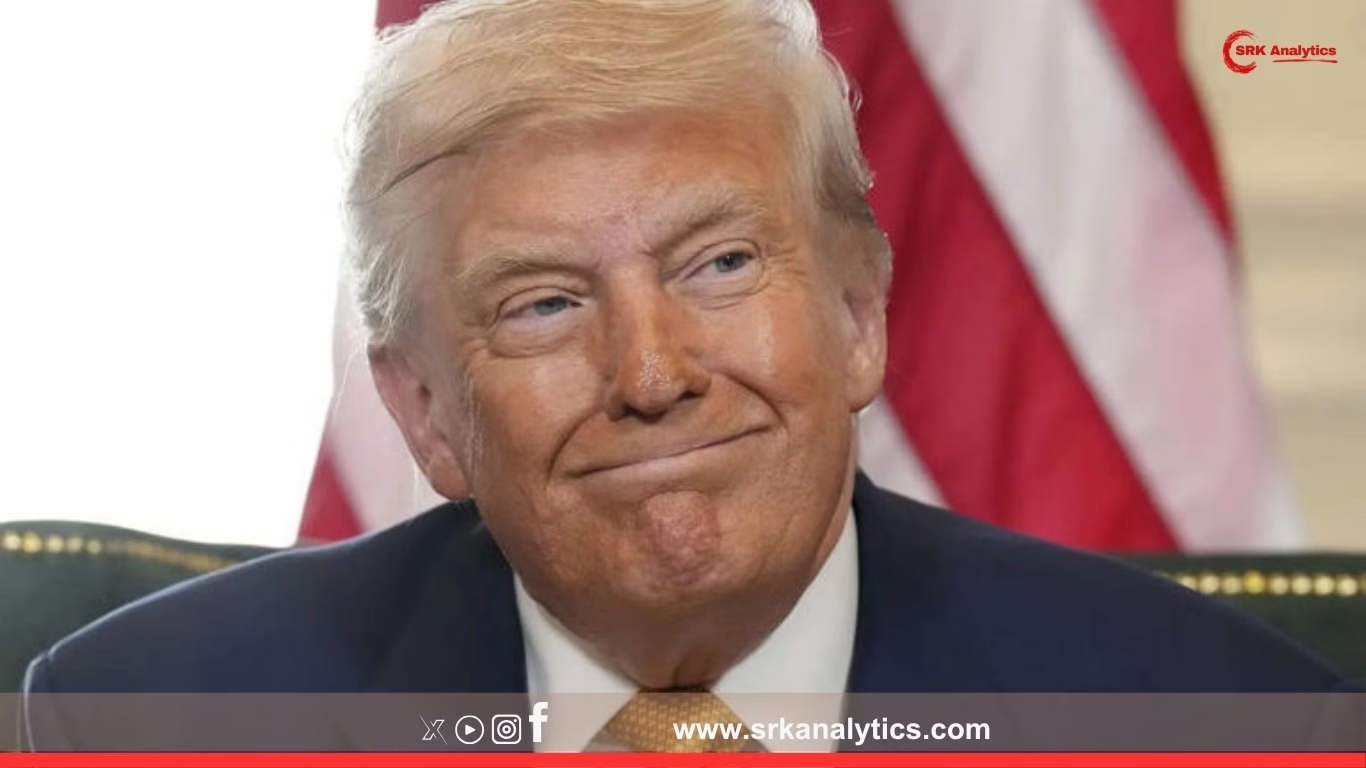
In a recent economic evaluation, SBI Research has flagged former US President Donald Trump’s tariff strategy as potentially more damaging to the United States than to India. According to the research unit of India’s largest lender, the imposition of steep 25% tariffs on Indian imports to the US is poised to generate higher inflationary pressures and reduce GDP growth within the United States, while India may absorb the shock with relatively limited economic disruptions.
This revelation comes at a crucial juncture in the evolving global trade architecture, with the US leaning into protectionist policies and India aggressively diversifying its export markets while ramping up self-reliant industrialization through initiatives like ‘Make in India’ and PLI schemes.
India better shielded from tariff shocks
SBI’s analysis underscores that India is positioned more resiliently in the face of these tariffs, thanks to several structural advantages:
- Diversified Export Markets: India has built strong trade ties with Southeast Asia, Africa, Europe, and the Middle East, thus reducing overdependence on the US market.
- Robust Domestic Demand: India’s consumption-driven economy acts as a buffer during periods of export fluctuation.
- Emerging Manufacturing Base: Schemes such as the Production-Linked Incentive (PLI) are helping boost domestic capacity in sectors like electronics, pharmaceuticals, and automotive components.
By contrast, the US economy, deeply embedded in a consumer-driven model reliant on cheap imports, may find it harder to substitute goods without driving up prices or creating supply shortages.
Comparative impact of tariffs: India vs United States
| Indicator | United States Impact | India Impact |
|---|---|---|
| GDP Growth | Down by 40–50 basis points | Down by 25–30 basis points |
| CPI Inflation | Rise by 1.2%–2.4% | Minor rise under 1% |
| Household Spending Burden | Increase by $1,200–$2,400 per year | Minimal change |
| Trade Rebalancing Timeline | Long-term adjustment (3–5 years) | Short-term rerouting achievable |
| Pharma & Electronics Sourcing | Limited local capacity, higher cost | Global clientele, alternative buyers exist |
| Consumer Goods Pricing | Sharp increase expected | Stable, barring high-end exports |
India’s export exposure to the US
Though the US remains a key trade partner, India’s export dependency is not overconcentrated. Here’s a breakdown of India’s top exports to the US and how they may be impacted:
| Sector | FY25 Export Volume (USD Billion) | Tariff Impact (Estimated) | Mitigation Strategy |
|---|---|---|---|
| Pharmaceuticals | 9.5 | Moderate to High | Expansion in EU and ASEAN markets |
| Gems and Jewellery | 8.2 | High | Shift towards Middle East, UAE, and UK |
| Machinery and Equipment | 6.3 | Moderate | Focus on self-reliant exports through PLI support |
| Textiles and Apparel | 5.8 | Low to Moderate | Pivot to EU, Australia (India-EFTA pact underway) |
| Auto Components | 3.9 | Moderate | Diversify through Indo-Pacific Economic Framework |
This rebalancing strategy, where India leverages free trade agreements, diplomatic ties, and manufacturing growth, may significantly reduce export stress over the medium term.
US consumers to bear the real cost
The SBI report argues that tariffs do not work in a vacuum. They become embedded in the pricing structure of imported goods. This leads to:
- Higher costs for everyday goods including smartphones, electronics, and household items.
- Rising producer costs in industries dependent on Indian APIs and precision engineering goods.
- Increased inflation, potentially leading the US Federal Reserve to prolong high-interest rates, hurting investment.
For example, the report notes that nearly 20% of US inflation is influenced by global commodity and import prices. Artificial price hikes caused by tariffs may distort purchasing behavior and reduce disposable income.
Global investors still bullish on India
Despite the trade noise, foreign direct investment (FDI) inflows into India remain steady. The resilience is attributed to:
- Long-term growth prospects supported by a large, young population.
- Steady macroeconomic fundamentals including controlled inflation and a stable rupee.
- Reform-oriented governance encouraging ease of doing business and digital adoption.
Institutional investors are reportedly not viewing the tariff escalation as a structural threat. Rather, it’s seen as a tactical disruption that India is capable of navigating.
A warning against protectionism
SBI Research’s tone also carries a cautionary note. History has shown that protectionist policies, while politically expedient, often lead to trade wars, supply chain shocks, and inflation. The US risks weakening its own competitiveness in sectors that heavily depend on global inputs, particularly in pharmaceuticals, semiconductors, and precision components.
On the flip side, countries like India, with agile diplomacy and expanding domestic capability, may turn short-term pain into long-term gain.
Strategic responses by India
India is unlikely to retaliate in kind but may pursue a measured response that includes:
- Expanding into new markets: Fast-tracking trade talks with EU, UK, Canada, and Latin American countries.
- Strengthening regional pacts: Increasing engagement through BIMSTEC, IPEF, and G20 platforms.
- Boosting export incentives: Temporarily enhancing MEIS/RODTEP schemes to support affected exporters.
- Encouraging domestic innovation: Bolstering research and industrial clusters to enhance self-sufficiency.
Conclusion
The SBI Research report clearly indicates that Trump’s proposed tariffs may end up being a self-inflicted wound on the US economy, hitting consumers and businesses harder than intended. India, though not unaffected, is better positioned to navigate the disruption through strategic diversification, strong internal demand, and proactive diplomacy.
If the tariffs go into full effect, India’s agility in policy and trade alliances could see it emerge more resilient, while the US grapples with the unintended consequences of its inward turn.
Disclaimer: The content of this article is based on research reports, economic analyses, and publicly available information. It does not constitute investment or trade advice. Readers are advised to consult experts or financial advisors before making any trade-related decisions.