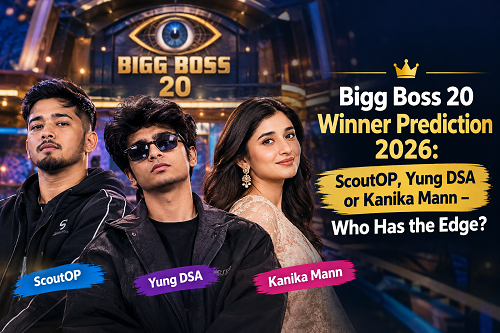

As Bigg Boss 20 moves deeper into the competition, speculation about the eventual winner is intensifying. This season has brought together contestants from television, music, gaming and digital entertainment, each bringing a different personality and approach to the house.
 |
Bigg Boss 20 Winner Prediction Showdown
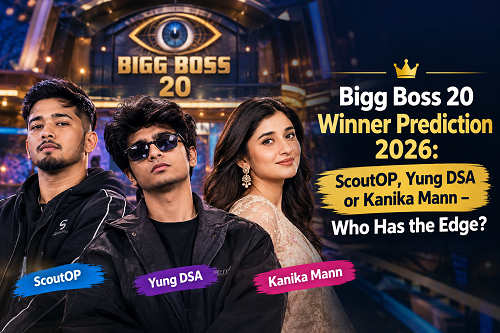
While the final result will depend on audience voting and what happens in the coming weeks, ScoutOP, Yung DSA and Kanika Mann have emerged as three contestants worth watching closely.
Based on their current gameplay, audience engagement, public profile, and astrological indicators, astrologers currently see ScoutOP as the strongest contender for the Bigg Boss 20 trophy.
Three Contestants of BB20 Who Could Go All the Way
1. ScoutOP: The Digital Star With a Competitive Edge
Tanmay Singh, popularly known as ScoutOP, entered Bigg Boss 20 with an advantage that few contestants can match – a large and highly engaged digital audience.
The gamer and streamer has built his career through esports, livestreaming and digital content, giving him a strong connection with India’s gaming community. Reports around his entry into the show have highlighted his substantial social media following, including around 4.4 million Instagram followers.
His competitive background could also play an important role inside the Bigg Boss house. Esports requires:
-
Quick decision-making
-
Strategic thinking
-
Performing under pressure
-
Adapting to opponents
-
Maintaining focus during competition
These qualities can translate well into Bigg Boss, where contestants have to constantly respond to changing alliances, tasks and house dynamics.
An unofficial Bigg Boss fan leaderboard currently places ScoutOP among the leading contestants in terms of fan engagement. However, these numbers are not official voting figures and should only be viewed as an indication of online interest.
2. Yung DSA: The Contestant Willing to Take Charge
Harsh Machare, better known as Yung DSA, represents a different kind of threat.
The rapper and hip-hop artist has already demonstrated that he is willing to take responsibility and put himself in competitive situations. His victory in the first captaincy task gave him an early opportunity to establish his presence inside the house.
His strengths include:
-
A strong and outspoken personality
-
Willingness to participate in house dynamics
-
Competitive temperament
-
Ability to take responsibility
-
Strong screen presence
His challenge, however, will be maintaining a balance between being outspoken and avoiding unnecessary conflicts.
In a show where public perception can change quickly, how a contestant handles disagreements can be just as important as how they perform in tasks.
3. Kanika Mann: Experience Meets a Strong Television Connect
Kanika Mann brings a different advantage to the competition.
Having already established herself through television and reality programming, she entered the Bigg Boss house with familiarity among a significant section of the Hindi television audience.
Her previous experience could help her understand the demands of a reality-show environment, while her willingness to express her opinions has kept her involved in the house’s major conversations.
-
Her key strengths include:
-
Existing television fan base
-
Previous reality-show experience
-
Strong communication skills
-
Ability to express her opinions
-
Familiarity with the entertainment audience
She also recently received public support from actress Mouni Roy, who praised her Bigg Boss journey and the way she has been conducting herself in the house.
ScoutOP vs Yung DSA vs Kanika Mann: Who Has the Edge?
The three contestants bring different strengths to the competition.
|
Factor |
ScoutOP |
Yung DSA |
Kanika Mann |
|
Digital audience |
Very strong |
Strong |
Strong |
|
Competitive background |
Very strong |
Strong |
Moderate |
|
Television experience |
Moderate |
Moderate |
Strong |
|
Reality-show experience |
Moderate |
Limited |
Strong |
|
Strategic potential |
Strong |
Strong |
Strong |
|
Current visibility |
Strong |
Strong |
Strong |
Based on these factors, ScoutOP currently has an interesting combination of digital reach, competitive experience and visibility.
But there is another factor that makes his candidature particularly interesting for astrology apps like Neo Astro from an astrological perspective.
What Does Astrology Say About ScoutOP?
ScoutOP was born on July 30, 1996, according to publicly available profiles, making him a Leo according to Western Sun-sign astrology.
Leo is traditionally associated with qualities such as:
-
Confidence
-
Leadership
-
Self-expression
-
Determination
-
Visibility
-
Competitive spirit
These characteristics can be relevant in a reality-show format where contestants need to establish a distinct identity and remain visible throughout the season.
However, astrology also suggests that strong personalities need to manage their reactions carefully. In a confined environment like Bigg Boss, disagreements and emotional reactions can quickly influence public perception.
Therefore, ScoutOP’s ability to combine his competitive nature with patience, emotional control and relationship management could become an important factor in his journey.
Why ScoutOP Could Win Bigg Boss 20
When the different factors are considered together, ScoutOP currently has a particularly strong winning profile.
His biggest advantages are:
-
A large existing audience: His popularity was established long before entering Bigg Boss, particularly among gaming and digital audiences.
-
Competitive experience: His esports background has exposed him to pressure, strategic decision-making and high-stakes competition.
-
Strong visibility: A Bigg Boss winner needs to remain part of the audience conversation. ScoutOP’s personality and digital following give him an advantage in this area.
-
Leadership-oriented personality: His Leo Sun sign is traditionally associated with confidence, leadership and a desire to stand out.
-
Online audience momentum: Unofficial fan-poll indicators currently show significant interest around his candidature, although these should not be confused with official Bigg Boss voting results.
Neo Astro’s Bigg Boss 20 Winner Prediction: ScoutOP
After considering gameplay, audience momentum, digital following, competitive experience and astrological indicators, Neo Astro astrologers currently give the edge to ScoutOP.
This astrology prediction isn’t based on astrology alone. His existing digital community gives him a potentially strong voting base, while his competitive background could help him handle tasks and strategic situations.
At the same time, his biggest challenge could be managing the intensity that makes him competitive in the first place. Maintaining relationships, avoiding unnecessary conflicts and staying consistent with viewers will be crucial as the competition becomes tougher.
If he manages to combine his competitive instincts with emotional balance and continues building a genuine connection with the audience, ScoutOP could emerge as one of the strongest candidates to lift the Bigg Boss 20 trophy.
Yung DSA and Kanika Mann remain serious contenders, and the dynamics of the Bigg Boss house can change rapidly. But based on the factors available at this stage, ScoutOP has the edge in Neo Astro’s winner prediction.
Disclaimer
This prediction is based on publicly available information, contestant performance, audience trends and astrological interpretations. It is intended for entertainment and informational purposes only and should not be considered a guaranteed prediction of the Bigg Boss 20 winner. The final result will depend on the contestants’ performance, nominations and the show’s official voting process.