






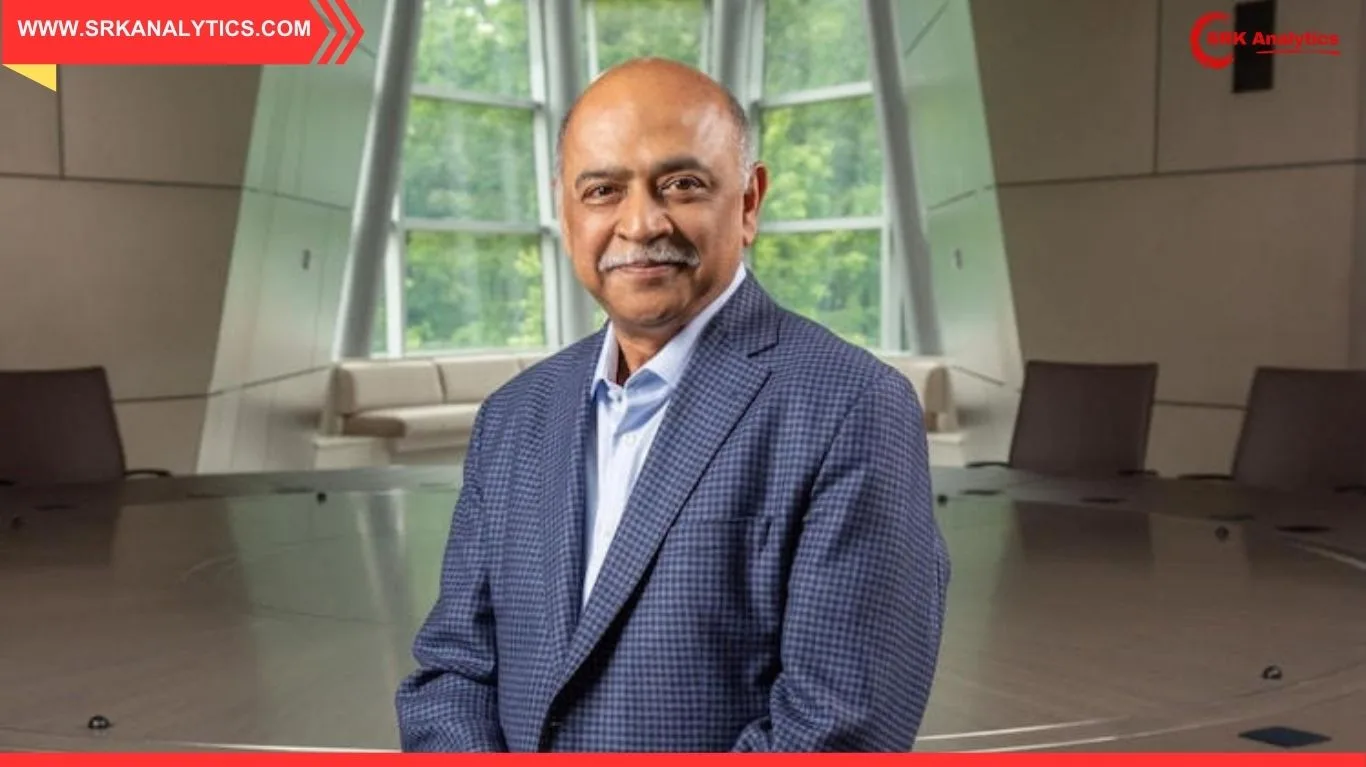
The global race to dominate artificial intelligence (AI) has reached unprecedented levels, with companies and governments pouring an estimated $1.5 trillion into AI-related investments. However, IBM CEO Arvind Krishna has sounded a cautionary note, warning that despite the massive spending, current AI technologies have only a 0-1% chance of achieving Artificial General Intelligence (AGI) in the foreseeable future. His remarks highlight the growing debate around whether today’s AI hype is sustainable or whether it risks becoming another bubble.
Background of the Warning
- IBM, one of the pioneers in computing and AI research, has long been involved in developing enterprise-grade AI solutions.
- Krishna’s comments reflect skepticism about the ability of current generative AI systems to evolve into true AGI, which refers to machines capable of human-like reasoning and adaptability.
- While acknowledging AI’s transformative potential in specific domains, he emphasized that expectations of AGI are premature.
- His warning comes amid record-breaking investments by tech giants, startups, and governments in AI infrastructure, talent, and applications.
Global AI Spending Trends
| Region | Estimated AI Spending (2025) | Key Focus Areas |
|---|---|---|
| United States | $600 billion | Cloud AI, generative AI, defense applications |
| China | $400 billion | Government-led AI initiatives, manufacturing automation |
| Europe | $250 billion | Ethical AI, healthcare, financial services |
| India | $150 billion | Education, IT services, generative AI learning |
| Rest of World | $100 billion | Mixed adoption across industries |
The $1.5 trillion figure underscores the scale of global bets on AI, even as doubts about AGI persist.
IBM CEO’s Key Concerns
| Concern | Details | Implication |
|---|---|---|
| Overhype of AGI | Current AI lacks reasoning and adaptability | Risk of unrealistic expectations |
| Massive Spending | Trillions invested without clear ROI | Potential bubble in AI investments |
| Ethical Challenges | Bias, misuse, and lack of regulation | Need for stronger governance |
| Workforce Impact | Job displacement without reskilling | Social and economic disruption |
Krishna’s remarks highlight the need for a balanced approach to AI adoption, focusing on practical applications rather than speculative AGI promises.
Current Capabilities of AI
- Generative AI: Excels at creating text, images, and code but lacks true reasoning.
- Machine Learning: Effective in pattern recognition and predictive analytics.
- Natural Language Processing: Enables chatbots and virtual assistants but struggles with context beyond training data.
- Computer Vision: Strong in medical imaging and surveillance but limited in abstract reasoning.
- Robotics: Advances in automation but far from human-like adaptability.
Why AGI Remains Elusive
- Human cognition complexity: Replicating human reasoning involves more than data processing.
- Energy and resource constraints: Current AI models consume massive computing power without scalable efficiency.
- Lack of common sense: AI systems struggle with tasks requiring contextual understanding.
- Ethical and regulatory hurdles: Concerns about misuse slow down progress toward AGI.
Expert Reactions
- Tech leaders: Some agree with Krishna, noting that AGI is decades away.
- Optimists: Others argue that breakthroughs in quantum computing or neuromorphic chips could accelerate progress.
- Economists: Warn that unchecked spending could lead to an AI investment bubble.
- Policy makers: Stress the importance of focusing on practical AI applications that deliver measurable benefits.
Impact on Global Workforce
| Sector | Potential AI Impact | Workforce Implication |
|---|---|---|
| IT & Software | Automation of coding tasks | Need for AI-skilled developers |
| Healthcare | AI-assisted diagnostics | Doctors supported, not replaced |
| Manufacturing | Smart factories | Job displacement in routine roles |
| Finance | Fraud detection, risk management | Upskilling in AI-driven analytics |
| Education | Personalized learning | Teachers augmented by AI tutors |
AI is reshaping industries, but the leap to AGI remains uncertain.
Strategic Importance for Businesses
- Companies must focus on practical AI solutions that enhance productivity and efficiency.
- Over-investing in speculative AGI projects could divert resources from real-world applications.
- Ethical AI deployment will be critical to maintaining trust among consumers and regulators.
- Businesses that balance innovation with responsibility will likely outperform peers in the long run.
Lessons for Investors
- Avoid overhype: Not all AI investments will yield returns.
- Focus on fundamentals: Companies with clear AI strategies are safer bets.
- Diversify portfolios: Spread investments across sectors benefiting from AI.
- Monitor regulation: Policy changes could significantly impact AI adoption.
Broader Economic Context
- AI spending reflects global competition for technological leadership.
- The US and China dominate investments, while Europe emphasizes ethical frameworks.
- India’s rapid adoption highlights the role of emerging economies in shaping AI’s future.
- The debate over AGI underscores the tension between ambition and reality in technology.
Conclusion
IBM CEO Arvind Krishna’s warning about AI spending and the slim chances of achieving AGI with current technology serves as a reality check for investors, businesses, and policymakers. While AI is revolutionizing industries and driving productivity, the dream of AGI remains distant. The focus, he argues, should be on practical applications that deliver measurable benefits rather than speculative bets. As $1.5 trillion flows into AI, the challenge lies in ensuring that investments create sustainable value without fueling unrealistic expectations.
Disclaimer
This article is intended for informational purposes only and does not constitute financial or technological advice. AI spending trends and projections are subject to change based on evolving technologies, policies, and market dynamics. Readers are encouraged to consult experts for accurate guidance. The author and publisher are not responsible for any decisions made based on this article.




Современная Стоматология в Воронеже лечение кариеса, протезирование, имплантация, профессиональная гигиена и эстетика улыбки. Квалифицированные специалисты, точная диагностика и забота о пациентах.